As an Amazon Associate, WasteZero earns from qualifying purchases. Some links on this page are affiliate links, at no extra cost to you.
The eco-friendly cleaning aisle has a credibility problem. Half the products labelled “natural” or “green” are little more than greenwashed versions of the same chemicals — just with a leaf on the label. The other half genuinely work, smell better, and are safer for your family, your surfaces, and the environment.
This guide cuts through the noise. These are the best natural cleaning products that actually work for European homes — tested across hard water conditions, limescale buildup, and the full range of household messes you encounter every week.
What Makes a Natural Cleaning Product Actually Good?
Before jumping to product recommendations, it helps to understand what separates effective eco-cleaners from ineffective ones. Three things matter most: active cleaning agents, concentration, and independent certification.
Active cleaning agents — natural cleaners use plant-derived surfactants (like alkyl polyglucosides), acids (citric acid for limescale), or enzymes (for breaking down protein and fat stains). If a product lists only water and fragrance, it won’t clean anything.
Concentration — concentrated products use less packaging, cost less per use, and reduce the carbon footprint of shipping. A 500ml concentrate that makes 25 litres of cleaner is dramatically more sustainable than 25 individual bottles.
Certification — look for EU Ecolabel, Nordic Swan Ecolabel, or Cradle to Cradle certification. These are third-party verified and have strict standards for biodegradability and ingredient safety.
Best Natural Cleaning Products for European Homes
1. All-Purpose Cleaner: White Vinegar + Water (DIY)
Before spending money on any branded product, know this: a 50/50 mix of white vinegar and water cleans glass, countertops, tiles, and most hard surfaces as effectively as most commercial cleaners. Add a few drops of tea tree oil for antimicrobial action. Cost per litre: under €0.50.
Important: Do not use vinegar on natural stone (marble, granite) or on waxed wood floors — the acidity will damage the surface.
2. Limescale Remover: Citric Acid
Hard water is a reality across much of central and northern Europe. Limescale builds up on kettles, shower heads, taps, and dishwashers. Citric acid — sold as a powder for €3–€5 per kilogram — dissolves limescale as effectively as any branded descaler, at a fraction of the cost and without chlorine or phosphates.
Mix 1–2 tablespoons per 500ml of warm water. Soak shower heads for 30 minutes, wipe taps directly with the solution, or run a kettle cycle with the diluted mix. Fully biodegradable and safe for septic tanks.
3. Laundry Detergent: Concentrated Eco Tabs or Strips
Laundry detergent is one of the biggest greenwashing battlegrounds. The best sustainable swap is concentrated laundry tabs or strips — they contain zero plastic packaging, weigh almost nothing (reducing shipping emissions), and perform well at 30–40°C.
Brands widely available across Europe include Tru Earth, Smol, and Bio-D. For heavily soiled loads, pre-treat stains with a paste of bicarbonate of soda and a little liquid Castile soap before washing.
4. Toilet Cleaner: Bicarbonate of Soda + Citric Acid
Pour 3 tablespoons of bicarbonate of soda into the toilet bowl, followed by 50ml of white vinegar or a tablespoon of citric acid dissolved in warm water. The fizzing reaction loosens stains and limescale from the bowl. Leave for 15 minutes, scrub, and flush. Zero plastic, zero chlorine, septic-safe.
For branded options, Ecover Toilet Cleaner holds EU Ecolabel certification and is widely available in supermarkets across Germany, France, the Netherlands, and the UK.
5. Washing-Up Liquid: Concentrated Plant-Based Formulas
Conventional washing-up liquids contain petroleum-derived surfactants and synthetic fragrances. The best eco alternatives use coconut or corn-derived surfactants and natural essential oils. Key thing to check: they must cut grease effectively or you’ll end up using twice as much.
Brands that consistently perform well: Frosch (widely available in Germany and Austria), Ecover (across western Europe), and Bio-D (UK). All hold EU Ecolabel or equivalent certification. Use a soap dispenser with a pump — it prevents the common problem of pouring too much.
6. Floor Cleaner: Castile Soap
Liquid Castile soap — made from olive or coconut oil — is one of the most versatile natural cleaning products available. Diluted (1 tablespoon per 4 litres of water) it cleans most hard floors without leaving residue. It’s safe for tiles, laminate, vinyl, and sealed wood.
Dr. Bronner’s is the most widely known brand, available across Europe. Smaller European producers include Sonett (Germany) and Organic Essence. A 500ml bottle diluted correctly lasts several months.
7. Oven and Hob Cleaner: Bicarbonate of Soda Paste
Commercial oven cleaners typically contain sodium hydroxide (lye), which requires gloves and ventilation to use safely. The natural alternative: mix bicarbonate of soda with just enough water to form a thick paste. Apply generously to oven surfaces, leave overnight, and wipe away with a damp cloth the next morning. For stubborn spots, spray with white vinegar before wiping — the reaction helps lift baked-on grease.
8. Mould and Mildew: Tea Tree Oil Spray
Tea tree oil has genuine antifungal properties — unlike many “natural” antimicrobial claims. Mix 20 drops of tea tree essential oil in 250ml of water in a spray bottle. Spray on mould-affected bathroom grout, silicone seals, or windowsill condensation. Leave without rinsing. It won’t bleach surfaces white but it does kill the mould spores.
For severe mould (black mould on walls), this is a surface treatment only — the underlying moisture issue must be addressed separately.
Ingredients to Avoid in “Natural” Cleaning Products
Not everything labelled eco-friendly or natural actually is. When reading labels, avoid these:
- Sodium lauryl sulphate (SLS) — petroleum-derived, irritating to skin, not readily biodegradable
- Triclosan — antibacterial agent, endocrine disruptor, banned in some EU countries but still present in some products
- Synthetic fragrances — listed as “parfum” or “fragrance” — can contain hundreds of undisclosed chemicals
- Phosphates — cause algal blooms in waterways; banned in laundry detergents in the EU since 2013 but still appear in some dishwasher products
- Optical brighteners — not biodegradable, accumulate in aquatic environments
Are Natural Cleaners Safe for Kids and Pets?
This is one of the most common questions European parents and pet owners ask — and it’s the right one to ask. The short answer: yes, with a few caveats.
Citric acid, bicarbonate of soda, white vinegar, and plant-derived Castile soap are all safe once dry. Surfaces cleaned with these products pose no risk to crawling babies or pets who lick floors. They also carry no fume risk during use, unlike chlorine bleach or ammonia-based cleaners.
The one exception is tea tree oil — in concentrated form it is toxic to cats and dogs. Always dilute properly (20 drops per 250ml) and keep pets out of treated areas until fully dry.
The Starter Kit: What to Buy First
If you’re switching to natural cleaning products for the first time, start with these five items — they cover 90% of household cleaning tasks:
- White vinegar (2 litres) — all-purpose cleaner, glass cleaner, fabric softener alternative
- Bicarbonate of soda (1kg) — scrubbing paste, odour absorber, toilet cleaner
- Citric acid powder (500g) — limescale remover, dishwasher cleaner, kettle descaler
- Liquid Castile soap (500ml) — floor cleaner, hand soap, surface cleaner
- Tea tree essential oil (30ml) — antimicrobial spray, mould treatment
Total cost across Europe: €15–€25. These five items replace most of what you’d normally spend €60–€100 per year on commercial cleaning products.
Final Thoughts
The best natural cleaning products for European homes aren’t mystery formulas from wellness brands. They’re simple, proven ingredients — citric acid, bicarbonate of soda, vinegar, Castile soap — that have been cleaning homes for generations. The difference now is we know exactly why they work, what the alternatives cost the environment, and how to use them correctly.
Start with the starter kit above. Replace commercial products one by one as they run out. Within three months, most European households find they’ve simplified their cleaning cupboard, reduced their plastic waste significantly, and saved money in the process.
Recommended Product
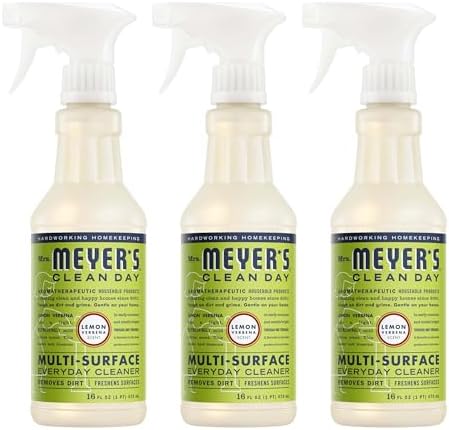
- REMOVES DIRT, FRESHENS SURFACES: A Multi-Surface Spray that cleans nonporous surfaces quickly, and leaves a fresh garden…
- TESTED & TRUSTED: Mrs. Meyer’s products are made with essential oils and other thoughtfully chosen ingredients that are …
- GARDEN-INSPIRED SCENTS: Lemon Verbena has a light, refreshingly mild citrus scent. This tender herb blossoms in early su…
MRS. MEYER’S CLEAN DAY Cleaner Spray, Lemon Verbena, 16 fl oz, 3 Pack
🌿 Get Your Eco-Swaps Delivered Free
Try Amazon Prime free for 30 days — fast free delivery on sustainable essentials, plus Prime Video and more. Cancel anytime.
Start Your Free Prime TrialAs an Amazon Associate we earn from qualifying purchases.