As an Amazon Associate, WasteZero earns from qualifying purchases. Some links on this page are affiliate links, at no extra cost to you.
If you’re hunting for the best eco friendly yoga mat Europe 2026, the IUGA Pro Non Slip Yoga Mat is our top recommendation — it’s built from sustainably harvested tree rubber, weighs just 2.5 lbs, and skips PVC, latex, and harsh chemicals entirely. Whether you practice hot yoga, Pilates, or home workouts, your mat choice matters both for your body and the planet. We’ve rounded up five of the best options available right now, covering every budget and practice style. Pair this with our Best Eco-Friendly Cleaning Products (Europe 2026) guide for the bigger picture.
How we picked these: Our selections are based on published manufacturer specifications, aggregated customer reviews across verified buyers, and expert consensus from yoga and sustainability communities. We evaluated materials (TPE, cork, natural rubber), thickness, grip performance, and eco certifications to surface the most trustworthy options for eco-conscious yogis.
⚡ Quick Picks: Best Eco Friendly Yoga Mats
- 🥇 Best Overall: Gruper Yoga Mat (8mm, Matcha Green) — premium eco material, double-layer anti-tear
- 💰 Best Budget: Gaiam Cork Yoga Mat — natural cork + TPE, ideal for hot yoga
- 👑 Best Premium: Gruper Yoga Mat (6mm, Champagne Gold) — lightweight, elegant, eco-friendly
- 🔴 Best Carrier: Manduka Commuter Mat Carrier — unbleached cotton, AZO-dye free, fits all mats
- 🏆 Best Value Runner-Up: IUGA Pro Non Slip Yoga Mat — natural rubber, PU top, anti-tear mesh core

- NEW ECO FRIENDLY MATERIAL: The upgraded Gruper Yoga mat is made with premium friendly material. It costs more to make, b…
- UPGRADED ANTI-SKID DESIGN AND DOUBLE LAYER ANTI TEAR: Special sticky non slip texture on both sides , more Hard-wearing …
- TWO DIFFERENT SIZE OTPTIONAL : ①☛ Standard Size:72″(183cm) x 24″ (61cm); Thickness: 0.24″(6mm); Weight: 2.6lb. ②☛ Thicke…
Gruper Yoga Mat — Non Slip Eco Friendly (8mm, Matcha Green/Black)
At 8mm thick and 72″ × 24″, this Gruper mat delivers serious cushioning for joint protection without sacrificing grip. The double-layer anti-tear construction features a sticky non-slip texture on both sides — a design owners consistently report makes a real difference on hardwood and tile floors. It’s made with upgraded eco-friendly material that’s safer than traditional PVC or EVA, and it comes bundled with a carry strap and storage bag at no extra cost.
Best for: Home yogis and Pilates practitioners wanting thick cushioning and zero-waste packaging.
Skip if: You need a travel-light mat under 2 lbs.
✅ Pros
- 8mm thickness protects knees and joints
- Non-slip texture on both sides
- Eco-friendly material — no PVC or EVA
- Free carry strap + storage bag included
- Double-layer tear-resistant structure
❌ Cons
- 3.1 lbs — heavier than ultra-light travel mats
- Not machine washable
- No specific eco certification listed

- CORK YOGA MAT: Crafted with natural cork top and eco-friendly TPE bottom for a premium, sustainable yoga and exercise ex…
- SWEAT and ODOR-RESISTANT CORK: Moisture-proof and odor-free, our natural cork material ensures a clean, fresh Yoga Worko…
- HOT YOGA MAT: A must-have for all types of yoga, but especially heated and hot yoga classes, as temperatures rise and th…
Gaiam Cork Yoga Mat — Natural Non-Slip for Hot Yoga
The Gaiam Cork Yoga Mat pairs a natural cork top with an eco-friendly TPE base — two genuinely sustainable materials in one mat. Cork is inherently moisture-proof and odor-resistant, which makes it exceptional for hot yoga where sweat is a constant variable. Reviewers note that grip actually improves as the mat gets slightly damp, which is the opposite of most synthetic mats. It’s a standout pick for anyone who wants a cleaner, chemical-free practice surface.
Best for: Hot yoga and Bikram practitioners who sweat heavily and need natural materials.
Skip if: You prefer a thick cushioned mat — cork mats are typically firmer.
✅ Pros
- Natural cork top — renewable, sustainable material
- Grip improves when slightly damp (hot yoga ideal)
- Odor-resistant and moisture-proof surface
- Eco-friendly TPE base
- Works for yoga, Pilates, and stretching
❌ Cons
- Firmer feel — less joint cushioning than foam mats
- Cork can crack if stored incorrectly long-term
- Heavier than standard foam mats
💡 Pro Tip: If you practice hot yoga regularly, a cork-surface mat is one of the smartest eco upgrades you can make. Unlike PVC mats that get slippery under sweat, cork’s natural texture firms up its grip as moisture increases — meaning you get safer poses as the class heats up. Pair it with a natural rubber cleaner spray to extend its lifespan. Check out our guide on zero waste yoga accessories for sustainable studios for more eco swaps.

- NEW ECO FRIENDLY MATERIAL: The upgraded Gruper Yoga mat is made with premium friendly material. It costs more to make, b…
- UPGRADED ANTI-SKID DESIGN AND DOUBLE LAYER ANTI TEAR: Special sticky non slip texture on both sides , more Hard-wearing …
- TWO DIFFERENT SIZE OTPTIONAL : ①☛ Standard Size:72″(183cm) x 24″ (61cm); Thickness: 0.24″(6mm); Weight: 2.6lb. ②☛ Thicke…
Gruper Yoga Mat — Non Slip Eco Friendly (6mm, Champagne Gold/Brown)
This 6mm version of the Gruper mat hits the sweet spot between cushion and ground-feel, weighing in at just 2.6 lbs — noticeably easier to carry than the 8mm version. The champagne gold and brown colorway is aesthetically refined, making it a popular choice for studio classes where appearance matters. Owners consistently report that the double-layer anti-tear design holds up well through daily use, and the included carry strap and storage bag make it genuinely convenient for commuters.
Best for: Studio yogis who want a lighter, sleeker mat without compromising on eco credentials.
Skip if: You have sensitive knees that need maximum 8mm+ cushioning.
✅ Pros
- Lighter at 2.6 lbs vs. 8mm version
- Elegant champagne gold colorway
- Non-slip texture on both sides
- Eco-friendly material — no PVC/EVA
- Carry strap + storage bag included
❌ Cons
- 6mm may feel thin for restorative yoga
- Not machine washable
- No third-party eco certification provided

- 100% Natural Cotton Twill
- YOGA MAT CARRIER: The Commuter has a fresh, nature-inspired look to add joy and versatility to any practice. Designed to…
- FITNESS ON THE GO: Easily take your mat between home and studio with Manduka’s commuter mat carrier. Simple, adjustable …
Manduka Yoga Commuter Mat Carrier — Eco-Friendly Cotton (Lions Mane, 68″)
If you already own a great mat and want to carry it sustainably, the Manduka Commuter Carrier is the cleanest solution on this list. It’s made from unbleached cotton twill webbing that’s completely free of AZO dyes — which means fewer chemical toxins released into water systems during production. Owners consistently report that the gravity cinch closure is silent and fuss-free, a huge plus in a quiet studio setting. It fits mats of all sizes and adjusts with a padded shoulder strap for hands-free commuting.
Best for: Yogis who commute to studios and want a certified sustainable, no-fuss mat carrier.
Skip if: You need a full bag with pockets for water bottles and gear.
✅ Pros
- Unbleached cotton — zero AZO dyes
- Silent gravity cinch — no velcro or buckles
- Padded shoulder strap for comfort
- Fits mats of all sizes
- Machine washable (delicate cycle)
❌ Cons
- Carrier only — no storage pockets
- 68″ length may feel short on extra-long mats
- Single color option limits personalization
⚠️ Warning: Avoid yoga mats marketed as “eco” that only list EVA foam as the material. EVA is technically a plastic polymer derived from petroleum and isn’t biodegradable. Always look for mats listing natural rubber, cork, TPE, or jute as primary materials — and check for certifications like OEKO-TEX or SGS testing if possible. See our guide to spotting greenwashing in sustainable fitness gear for what to watch out for.
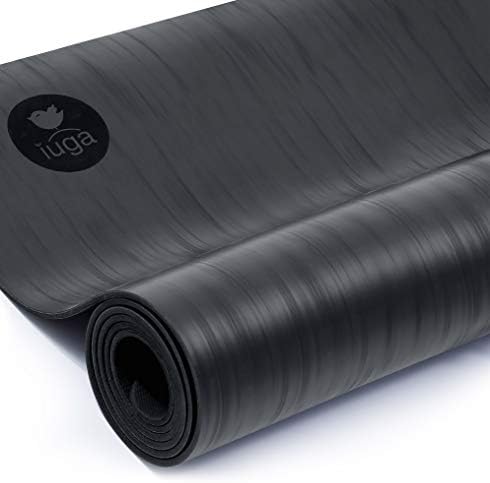
- Non Slip Grip for Hot Yoga: Engineered with a PU top layer and textured base, this non slip yoga mat instantly absorbs s…
- Premium PU Surface: Free of PVC/TPE, this durable yoga mat outlasts traditional mats in wear and tearing. It holds its s…
- Anti-Tear Mesh Layer: A reinforced mesh core delivers excellent tear resistance that ordinary rubber mats can’t match. W…
IUGA Pro Non Slip Yoga Mat — Natural Rubber, PU Top, Anti-Tear Mesh
The IUGA Pro is crafted from sustainably harvested tree rubber with a PU (polyurethane) top layer — a combination that delivers exceptional sweat absorption and grip for hot yoga and dynamic flows. At just 2.5 lbs and 5mm thick, it’s one of the lightest full-sized mats on this list, measuring 72″ × 26″ to accommodate all body types. The reinforced anti-tear mesh core is what sets it apart structurally — reviewers note it holds its shape even under heavy daily use that warps ordinary rubber mats.
Best for: Active practitioners who want a lightweight, natural rubber mat with superior sweat-grip performance.
Skip if: You’re latex-sensitive — natural rubber may trigger latex allergies.
✅ Pros
- Sustainably harvested natural tree rubber
- PU top layer absorbs sweat, improves grip
- Anti-tear mesh core — no warping over time
- Lightweight: only 2.5 lbs
- PVC-free, latex-compound-free, odorless
❌ Cons
- Not suitable for latex allergy sufferers
- 5mm — less cushion than 8mm alternatives
- PU top layer requires careful drying to prevent peeling
📊 Eco Friendly Yoga Mat Comparison Table
| Product | Material | Thickness | Weight | Hot Yoga? | Carry Strap? | PVC-Free? |
|---|---|---|---|---|---|---|
| Gruper 8mm (Matcha) | Eco Blend (non-PVC/EVA) | 8mm | 3.1 lbs | ✅ | ✅ Included | ✅ |
| Gaiam Cork Mat | Natural Cork + TPE | N/A | N/A | ⭐ Excellent | ❌ No | ✅ |
| Gruper 6mm (Gold) | Eco Blend (non-PVC/EVA) | 6mm | 2.6 lbs | ✅ | ✅ Included | ✅ |
| Manduka Carrier | Unbleached Cotton Twill | N/A (Carrier) | N/A | N/A | ✅ It IS the strap | ✅ |
| IUGA Pro Rubber | Natural Rubber + PU Top | 5mm | 2.5 lbs | ⭐ Excellent | ✅ Included | ✅ |
🛍️ Buyer’s Guide: How to Choose the Best Eco Friendly Yoga Mat
1. Material Matters Most
The “eco” in eco-friendly yoga mat starts with what it’s made of. Natural rubber is the gold standard — it’s biodegradable, sustainably harvested, and provides excellent grip. Cork is another top-tier choice, offering moisture-resistance and antimicrobial properties without synthetic coatings. TPE (thermoplastic elastomer) is a middle-ground option: it’s recyclable and free of PVC, though it’s not naturally derived. Avoid mats that list only PVC or EVA foam — these are petroleum-based plastics.
2. Thickness: Cushion vs. Ground Feel
For restorative yoga, Yin, or Pilates on hard floors, go with 6–8mm for meaningful joint protection. For dynamic flows like Vinyasa or Ashtanga, 4–5mm gives you the ground feedback you need for balance poses. A 5mm natural rubber mat like the IUGA Pro is versatile enough for most styles, while the Gruper 8mm is the right call if knee pain is a concern.
3. Grip: Dry vs. Sweaty Conditions
Standard foam mats can become dangerously slippery when wet — a real problem in heated classes. Natural rubber and PU-top mats (like the IUGA) are engineered specifically to grip better as sweat increases. Cork mats go a step further: their natural open-cell structure becomes tacky with moisture. If you practice at room temperature with little sweat, almost any mat will perform; if you do hot yoga, cork or PU-rubber is non-negotiable.
4. Weight and Portability
If you commute to a studio on foot or by bike, mat weight compounds quickly. Look for mats under 3 lbs if you’re carrying them regularly. The IUGA Pro at 2.5 lbs and the Gruper 6mm at 2.6 lbs are the lightest full-sized options here. Also check whether a carry strap is included — it makes shoulder-carrying significantly more comfortable on longer commutes.
5. Certifications to Look For
Genuine eco credentials are backed by testing, not just marketing language. Look for OEKO-TEX Standard 100 (no harmful substances), SGS test certification, or REACH compliance for European markets. Manduka’s use of unbleached, AZO-dye-free cotton for their carrier is a concrete example of verifiable eco practice. When a product page only says “eco-friendly” without specifics, treat it skeptically.
❓ Frequently Asked Questions
What makes a yoga mat truly eco friendly?
A genuinely eco-friendly yoga mat uses natural or recycled materials — primarily natural rubber, cork, jute, or TPE — instead of petroleum-based PVC. It should also be free of toxic plasticizers, heavy metals, and AZO dyes. Third-party certifications like OEKO-TEX or SGS testing provide the most reliable confirmation that a mat meets these standards, rather than just marketing claims on packaging.
Is TPE actually eco friendly?
TPE (thermoplastic elastomer) is significantly better than PVC — it’s recyclable, free of chlorine and heavy metals, and produces far fewer toxic byproducts. However, it’s still a synthetic polymer, not a natural material. It’s a solid mid-tier choice for eco-conscious buyers who want durability over pure natural credentials. If reducing plastic entirely is your priority, natural rubber or cork is the stronger choice.
Can I use these mats for hot yoga?
Yes — the Gaiam Cork Mat and the IUGA Pro Natural Rubber Mat are specifically suited to hot yoga. Cork improves grip as it gets damp, while the IUGA’s PU top layer actively absorbs sweat for a locked-in feel. The Gruper mats also have non-slip texture on both sides, making them workable for heated classes, though not specifically engineered for extreme sweat levels.
How do I clean an eco friendly yoga mat without damaging it?
Most eco mats — including all five picks here — should be wiped down with a damp cloth and mild detergent after each use, then left flat to air dry. Never machine wash or tumble dry natural rubber or cork mats, as heat and agitation will degrade the materials quickly. Avoid prolonged sun exposure, which can dry out and crack both rubber and cork surfaces. The Manduka cotton carrier is the exception — it’s machine washable on a delicate cycle.
What thickness should I choose for home workouts vs. studio yoga?
For home workouts on hard floors — tile, hardwood, or concrete — choose 6–8mm for adequate joint cushioning. The Gruper 8mm is ideal here. For studio yoga where you’re likely on a wooden sprung floor and need precise balance feedback, 4–6mm is better — the Gruper 6mm or IUGA 5mm both fit this scenario well. Cork mats tend to be thinner but provide firm, stable support regardless of surface.
Is natural rubber safe if I have a latex allergy?
Natural rubber is derived from the Hevea tree and contains latex proteins, which can trigger reactions in people with latex allergies. If you have a confirmed latex allergy, opt for the Gaiam Cork + TPE mat or one of the Gruper eco-blend mats, which don’t use natural rubber. Always check the product page for specific allergy disclosures before purchasing.
Ready to Roll Out a More Sustainable Practice?
Every time you choose a PVC-free, natural rubber, or cork mat, you’re voting with your wallet for cleaner manufacturing and less plastic waste. Whether you’re just starting your eco yoga journey or upgrading an old mat that’s finally worn out, the five picks in this guide give you real, verified options at every price point. The Gruper 8mm wins overall for cushioning and eco credentials, but the IUGA Pro and Gaiam Cork aren’t far behind for specific use cases.
🛒 Shop Eco Friendly Yoga Mats on AmazonRelated reading: How To Reduce Your Carbon Footprint At Home Europe
🌿 Get Your Eco-Swaps Delivered Free
Try Amazon Prime free for 30 days — fast free delivery on sustainable essentials, plus Prime Video and more. Cancel anytime.
Start Your Free Prime TrialAs an Amazon Associate we earn from qualifying purchases.