Last updated: October 11, 2026
Quick answer: For the kitchen counter, our overall pick is the Epica 1.3-gallon stainless steel bin, which had the most ratings of any bin we checked and uses a replaceable charcoal filter. If you’d rather have plastic you can rinse fast, pick the OXO Good Grips Easy-Clean. For the yard, the Redmon 65-gallon bin is the lowest-priced outdoor pick here, and the RSI Maze tumbler is the pick if you want to turn the pile with a handle instead of a fork.
A compost bin setup usually has two parts: a small kitchen bin (a “caddy” or “pail”) that collects scraps for a few days, and a larger outdoor bin or tumbler, or a local collection program, where the scraps actually become compost. Below are five kitchen bins, three outdoor bins and one liner, compared by size, material and odor control.
Disclosure: This post contains affiliate links. If you buy through them, we may earn a commission at no extra cost to you.
How we picked: We compared each listing’s capacity, material, filter or vent design, dimensions, seller and rating count, and checked Amazon US availability for delivery to New York 10001 on October 11, 2026. Composting advice comes from the EPA’s Composting At Home guide. We did not test these bins ourselves, so odor control and durability are the makers’ claims or buyer ratings, not our measurements.
Best Compost Bins at a Glance
| Pick | Best for | Size (per listing) | Price tier |
|---|---|---|---|
| Epica Stainless Steel | Best kitchen bin overall | 1.3 gal | Mid |
| OXO Good Grips Easy-Clean | Plastic, smooth interior | 0.75 gal (1.75 gal sold too) | Lower |
| RED FACTOR | Dual charcoal filters | 1.3 gal | Mid |
| Joseph Joseph Compo | Under-sink or cabinet door | 1 gal (4 L) | Lower |
| Chef’n EcoCrock | Ceramic look | 3 L (about 0.75 gal) | Higher |
| Redmon Outdoor Bin | Budget outdoor bin | 65 gal | Lower (outdoor) |
| RSI Maze Tumbler | Turning without a fork | 65 gal drum + cart | Higher (outdoor) |
| Greenes Cedar Composter | Large wooden bin | 173.92 gal | Mid (outdoor) |
Kitchen and outdoor bins are tiered separately, since an outdoor bin costs several times more than a countertop pail. Prices change often, so check the current price on each listing. We also list compostable liners at the end.
Kitchen Bin, Outdoor Bin or Tumbler: Which Do You Need?
A kitchen compost bin only stores scraps; it does not make compost. You empty it every few days into an outdoor bin, a tumbler or a local food-scrap collection. If you compost in a yard, a kitchen bin makes carrying scraps out easier. If you don’t have a yard, a kitchen bin plus a community drop-off or curbside program is the usual setup.
| Type | What it does | Who it suits |
|---|---|---|
| Kitchen bin (countertop or under-sink) | Holds scraps for a few days; filter or vent helps with smell | Anyone collecting food scraps indoors |
| Outdoor bin (stationary) | Holds a pile that breaks down in place; you turn it with a fork | Yards with room for a fixed bin |
| Tumbler | A drum on a frame that you rotate to mix the pile | People who don’t want to fork-turn a pile |
| Electric “composter” (grind-and-dry type) | Grinds and dries scraps | See the note below; the EPA says this type doesn’t make compost |
Do electric composters make compost? The grind-and-dry kind doesn’t on its own. The EPA’s Composting At Home guide says these residential pre-processing appliances grind and dry food scraps but “do not produce compost”; the dried mixture still has to go into a compost system. That’s why we left these appliances out of this list.
What Size Kitchen Compost Bin Do You Need?
Pick a size you’ll empty every few days: a smaller bin fills faster, while a large one that sits half-full for a week gives smells more time to build. Here is what each kitchen pick holds, per its listing.
| Kitchen bin | Capacity | Material | Odor control (per listing) |
|---|---|---|---|
| OXO Easy-Clean (small) | 0.75 gal (2.83 L) | Plastic | Lid flips down “to lock in odors”; no filter mentioned |
| OXO Easy-Clean (large) | 1.75 gal (6.62 L) | Plastic | Soft-close lid lets air flow in; no filter mentioned |
| Joseph Joseph Compo | 1 gal (4 L) | Polypropylene | Adjustable air vent |
| Chef’n EcoCrock | 3 L (about 0.75 gal) | Ceramic outer, removable inner bucket | Two charcoal filters included |
| Epica | 1.3 gal | Stainless steel | Replaceable charcoal filter |
| RED FACTOR | 1.3 gal | Stainless steel | Dual carbon filters, vented lid |
Charcoal filters wear out. Epica says its filter lasts 3 to 6 months with regular use; for the others, check the listing for replacement filters before you buy.
The 5 Best Kitchen Compost Bins
Each entry gives what the listing claims, what we couldn’t confirm, and who should skip it.
1. Epica Stainless Steel Compost Bin, 1.3 Gallon

Why we picked it: It had the most ratings of any bin we checked (20,997, 4.6 stars). The listing describes a one-piece stainless steel pail, 7.16 inches across and 11 inches high, with a lid and a replaceable activated-charcoal filter that Epica says lasts 3 to 6 months with regular use. It sat in the middle of our kitchen price range and shipped from Amazon (sold by a third-party seller, Perella’s, at our check).
Best for: a countertop bin you empty every few days, if you prefer metal to plastic. Who this is NOT for: anyone who wants a dishwasher-safe bin; Epica says to hand-wash it, and to rinse the filter gently rather than soak it.
Limitation: you’ll need to buy replacement filters over time. We hid the card bullets because they lean on magazine mentions and a “last a lifetime” claim we can’t verify.
2. OXO Good Grips Easy-Clean Compost Bin, 0.75 Gallon

- Convenient size and design for everyday counter-top use
- Lid flips up for easy filling and flips down to lock in odors
- Smooth interior walls prevent foods and liquids from building up
Why we picked it: OXO built this bin around cleaning: smooth interior walls, a contoured bottom and a removable lid that flips up for filling and down to close. The small size is 0.75 gallon (2.83 liters), and it had 18,090 ratings (4.6 stars), though the same count showed on the 1.75-gallon version, so the ratings appear to be shared. It was in the lower price tier and shipped from Amazon (sold by a third-party seller at our check).
Best for: small households, or anyone who hates scrubbing a pail. Who this is NOT for: anyone who wants a charcoal filter; neither OXO listing mentions one.
Limitation: 0.75 gallon fills fast for a family that cooks a lot. OXO also sells a 1.75-gallon version (6.62 liters) with a stay-open lid and a removable inner bucket that OXO says is dishwasher safe, but it showed only 4 left in stock at our check, so we didn’t make it the main pick.
3. RED FACTOR Stainless Steel Compost Bin, 1.3 Gallon

Why we picked it: It had the highest star rating among the kitchen bins (4.8 stars from 5,921 ratings). RED FACTOR describes a 1.3-gallon stainless steel pail (10.8 x 8.7 x 7.3 inches) with a dome lid, ventilation holes and a dual carbon-filter setup, sold by RED FACTOR and shipped from Amazon. It sat in the middle of our kitchen price range.
Best for: kitchens where smell is the main worry, if you’re willing to keep up with filter changes. Who this is NOT for: anyone who wants to put the bin in the dishwasher; the listing says it isn’t machine washable.
Limitation: no filter makes a bin odor-free if scraps sit too long. We hid the card bullets because they call the bin “completely odorless,” which we can’t verify.
4. Joseph Joseph Compo Wall-Mountable Compost Caddy, 1 Gallon

Why we picked it: It’s the only kitchen pick here built to hang on a cabinet door. Joseph Joseph describes a slim 4-liter (1-gallon) polypropylene caddy, 4.72 x 11.69 x 6.81 inches, with a flip-up lid, a wide opening for scraping plates, a door bracket and an adjustable air vent. It had 5,168 ratings (4.6 stars), was sold and shipped by Amazon, and was in the lower price tier.
Best for: small kitchens without spare counter space. Who this is NOT for: anyone who wants a charcoal filter; this caddy uses a vent instead, and the maker says to wash and dry it by hand.
Limitation: Joseph Joseph says it fits its own IW2 liners, so check that size if you plan to use liners.
5. Chef’n EcoCrock Ceramic Counter Compost Bin
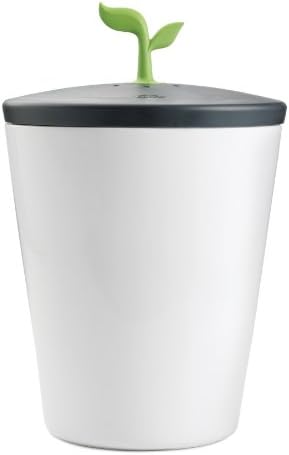
Why we picked it: It’s the only ceramic bin here, for kitchens where the bin sits in view. Chef’n describes a 3-liter (0.75-gallon) ceramic outer crock with a removable inner bucket that is top-rack dishwasher safe, a vented lid and two charcoal filters included. It had 2,803 ratings (4.6 stars) and was sold and shipped by Amazon.
Best for: a small household that wants a bin that looks like kitchenware. Who this is NOT for: budget buyers or big families; it was the highest-priced kitchen pick at our check, and it holds less than the 1.3-gallon steel bins.
Limitation: ceramic can chip or crack if dropped. The title says 3.3 liters while the listing’s bullets say 3 liters, so plan around the smaller figure. We hid the card bullets because they include an “odor free” claim we can’t verify.
Pro Tip: Line the bottom of your kitchen bin with a sheet of newspaper or a handful of dry leaves to soak up moisture, and empty it every few days. Coffee grounds, fruit and vegetable scraps, paper tea bags and crushed eggshells are all on the EPA’s list of what you can add to a backyard pile.
The 3 Best Outdoor Compost Bins and Tumblers
An outdoor bin is where kitchen scraps actually turn into compost. These are tiered against each other, not against the kitchen bins.
6. Redmon 65-Gallon Outdoor Compost Bin

Why we picked it: It was the lowest-priced outdoor bin we checked, with the most ratings among the outdoor picks (3,071, 4.5 stars). Redmon describes a 65-gallon plastic bin (26 x 26 x 30.75 inches) made with 80 percent recycled materials, with vent holes, a lift-off lid, four access doors for removing finished compost, and tool-free assembly. It was sold and shipped by a third-party seller (Spreetail).
Best for: a first backyard bin for kitchen scraps and garden waste. Who this is NOT for: anyone who wants to mix the pile with a handle; in a stationary bin you turn it by hand with a fork or similar tool.
Limitation: the listing we read doesn’t say whether the bin has a floor. To help keep rodents out, the EPA recommends reinforcing a bin with a lid and potentially a floor, with no holes or gaps larger than ¼ inch, so check this if rodents are common where you live. We hid the card bullets because they promise “rapid” composting, which depends on how you manage the pile.
7. RSI Maze Compost Tumbler with Cart, 65-Gallon Drum

- Made from UV high impact plastic
- Large clearance area underneath to allow for easy unloading. Cart has low profile makes it easier to collect and transpo…
- Retched locking handle. Geared handle which allows for easy Turning of composter, even when fully loaded
Why we picked it: Compost tumblers are a common search on their own, and this one comes with a wheeled cart. RSI lists a 65-gallon drum on a zinc-coated metal frame with a geared turning handle, a ratchet lock, adjustable air vents and two sliding doors, plus a 12-gallon cart that sits underneath for unloading. It had 607 ratings (4.5 stars).
Best for: people who want to mix the pile by turning a handle instead of forking it. Who this is NOT for: budget buyers; it was the highest-priced outdoor pick at our check, and it was sold and shipped by a third-party seller (OJCommerce).
Limitation: at 41.3 x 30 x 44.5 inches assembled, it needs real yard space. The listing title and description use different model wording (the description calls it the “MAZE Two stage” tumbler), so check the photos and door layout on the listing before you buy.
8. Greenes Fence Cedar Wood Composter, 36 x 36 x 31 Inches

Why we picked it: It’s the largest bin here by stated volume (173.92 gallons) and the only wooden one. Greenes lists 3/4-inch sanded North American cedar boards, assembly with just a mallet, and add-on kits that turn it into a two- or three-bin system. It had 362 ratings (4.6 stars), was in the middle of our outdoor price range, and was sold by Greenes Fence.
Best for: gardens with plenty of leaves and yard trim to mix with kitchen scraps. Who this is NOT for: small yards or balconies; at 36 x 36 inches it takes a full corner.
Limitation: the listing we read doesn’t mention a lid or a floor, so add rodent protection if you need it (see the EPA guidance above). Greenes says compost takes 3 to 12 months depending on climate and materials. We hid the card bullets because they compare drainage with tumblers, a claim we can’t verify.
Liners: SUPERBIO Compostable Food Scrap Bags, 1.6 Gallon

- Product Information: SUPERBIO Compostable Food Scrap Bags ,1.6 gallon (6L) 16.1 in x 19.3 in x 0.63 mil, 50 bags per rol…
- Certifications: SUPERBIO bags have been awarded official certificates from Biodegradable Products Institute (BPI) (Comme…
- Storage & Usage: Keep product away from heat and store in a cool, dry place, SUPERBIO bags have a shelf life of approx. …
Why we list it: A liner keeps the kitchen bin cleaner. SUPERBIO lists 1.6-gallon (6-liter) bags, 50 per roll, with handle ties, and says they carry BPI certification (commercially compostable only) and TÜV OK compost HOME and SEEDLING marks, meeting ASTM D6400 and EN 13432. It had 3,755 ratings (4.7 stars), was sold by SUPERBIO and shipped from Amazon, and was the lowest-priced item here.
Who this is NOT for: anyone who only has a backyard pile. The EPA lists compostable bags among things to keep out of a backyard pile, because home piles generally don’t get hot enough to break them down fully. These bags make most sense if your city’s food-scrap collection accepts them; check with your program first.
Limitation: SUPERBIO says to dispose of a bag within 3 days once it holds food waste, and that the bags have a shelf life of about a year. Check that 1.6 gallons fits your bin before you buy.
How to Use an Outdoor Compost Bin (EPA Basics)
Mix at least two to three times as much “browns” (dry leaves, shredded cardboard) as “greens” (food scraps), keep the pile as damp as a wrung-out sponge, and turn it now and then. That’s the core of the EPA’s Composting At Home guide. A well-kept pile is ready in about three to five months; an untended one can take a year.
- Start with a base of 4 to 6 inches of bulky browns such as twigs, then layer greens and browns.
- Cover food scraps with 4 to 8 inches of dry leaves or other browns.
- If it smells, it may be too wet or need air: add browns and turn it.
- Keep out meat, fish, dairy, fats and oils, pet waste, and compostable bags or foodservice ware.
- To help deter rodents, use a lid, potentially a floor, and no holes or gaps larger than ¼ inch, and bury food scraps under browns.
No yard? Our guide to composting at home in an apartment covers options without outdoor space, and our beginner’s guide to home composting goes deeper on getting started.
Notes for UK and EU Readers
The product links on this page go to Amazon US, and we checked availability only for New York 10001. We did not check UK or EU stock, so check your local Amazon, other local retailers or your council’s or municipality’s food-waste program, which may supply its own caddy.
Season Tip: US Bing data averages 4,600 searches a month for "compost bin," with monthly figures from 3,610 to 7,230 and the highest in March to May. Our suggestion: autumn leaves are the "browns" a pile needs, so if you’re setting up an outdoor bin, fall is a good time to stockpile them.
Frequently Asked Questions
What is the best compost bin for the kitchen?
Our overall pick is the Epica 1.3-gallon stainless steel bin with a replaceable charcoal filter, which had the most ratings of any bin we checked. For easy cleaning, pick the OXO Good Grips Easy-Clean; for a cabinet door, the Joseph Joseph Compo.
Do kitchen compost bins smell?
They can if scraps sit too long. The listings offer charcoal filters (Epica, RED FACTOR, Chef’n) or an air vent (Joseph Joseph) for odor control, but the main fix is emptying the bin every few days and washing it regularly.
Is a compost tumbler better than a compost bin?
Neither is better for everyone. A tumbler lets you mix the pile by turning a handle, while a stationary bin is usually cheaper and you turn it with a garden fork. The EPA lists both bins and tumblers as options for backyard composting.
Can you put compostable bags in a backyard compost bin?
The EPA advises against it: backyard piles generally don’t get hot enough to fully break down compostable bags and foodservice ware. Use them for a commercial or municipal collection that accepts them, and check with your program first.
Do electric composters make compost?
The grind-and-dry kind doesn’t on its own. The EPA says residential appliances that grind and dry food scraps do not produce compost; the dried material still needs to go into a compost system.
How long does it take to make compost?
The EPA says a well-maintained backyard pile is ready in about three to five months, while an untended one may take a year. Greenes says compost in its bin takes 3 to 12 months depending on climate and materials.
The Bottom Line
For the kitchen, our overall pick is the Epica stainless steel bin. Choose OXO Good Grips for easy cleaning, RED FACTOR for dual filters, Joseph Joseph Compo for a cabinet door, or Chef’n EcoCrock for ceramic. Outdoors, start with the Redmon bin, choose the RSI Maze tumbler to turn the pile with a handle, or the Greenes cedar bin for a large garden. Whichever you pick, empty the kitchen bin every few days and keep the outdoor pile heavy on browns.
Related Guides
- How to compost at home in an apartment
- Beginner’s guide to home composting
- Best compostable food bags
- How to reduce food waste at home
- Best rain barrels
🌿 Get Your Eco-Swaps Delivered Free
Try Amazon Prime free for 30 days — fast free delivery on sustainable essentials, plus Prime Video and more. Cancel anytime.
Start Your Free Prime TrialAs an Amazon Associate we earn from qualifying purchases.